
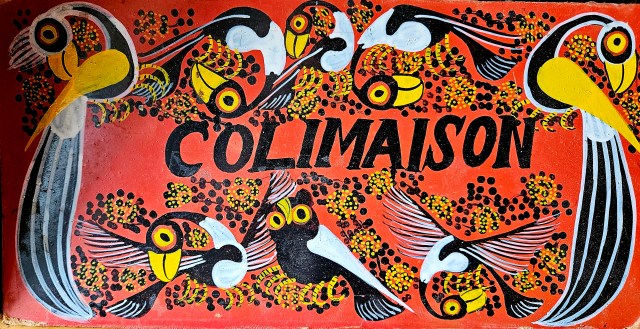
– “What’s in a Name?” by Peter Christie. The Wig Standard, May 11, 1991.
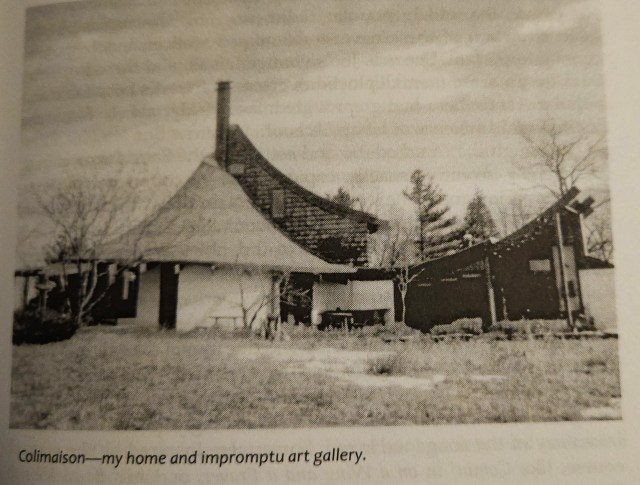
“While I needed to work the Ottawa social scene and to some extend I did, I resolved to spend as many weekends at Colimaison as possible and not be sidetracked by diplomatic and bureaucratic partying which, while occasionally useful and even enjoyable, takes up a lot of time. Beating a hasty retreat on Friday evenings, loaded with three huge government briefcases containing urgent reading, provided a credible excuse for turning down invitations.
“I also embellished my office with a regular supply of flowers, some of which — the hyacinths, tulips and daffodils — I forced at Colimaison.”
-John Meisel, A Life of Learning and Other Pleasures: John Meisel’s Tale, 2012.
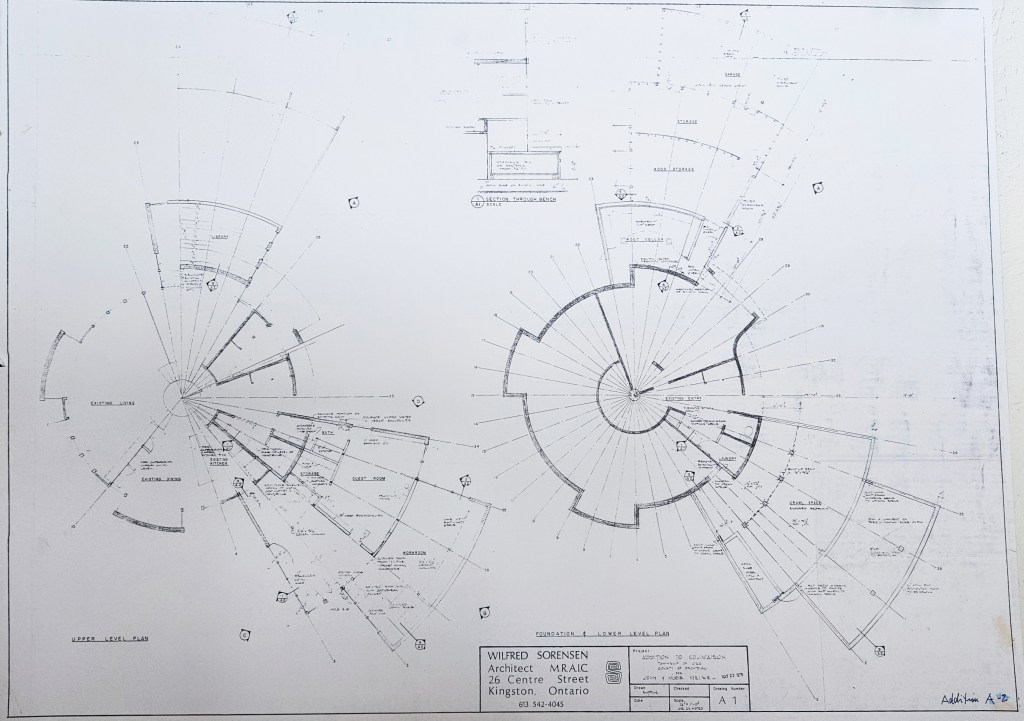
[John Meisel’s] chief recreational interests are the visual and performing arts, walking and tottering on cross-country skis, bird watching and wild flower admiring, indoor gardening and the printed word in any guise or form. From May to December, he rattles around in a round, spiral house in the middle of nowhere (but by a beautiful lake).
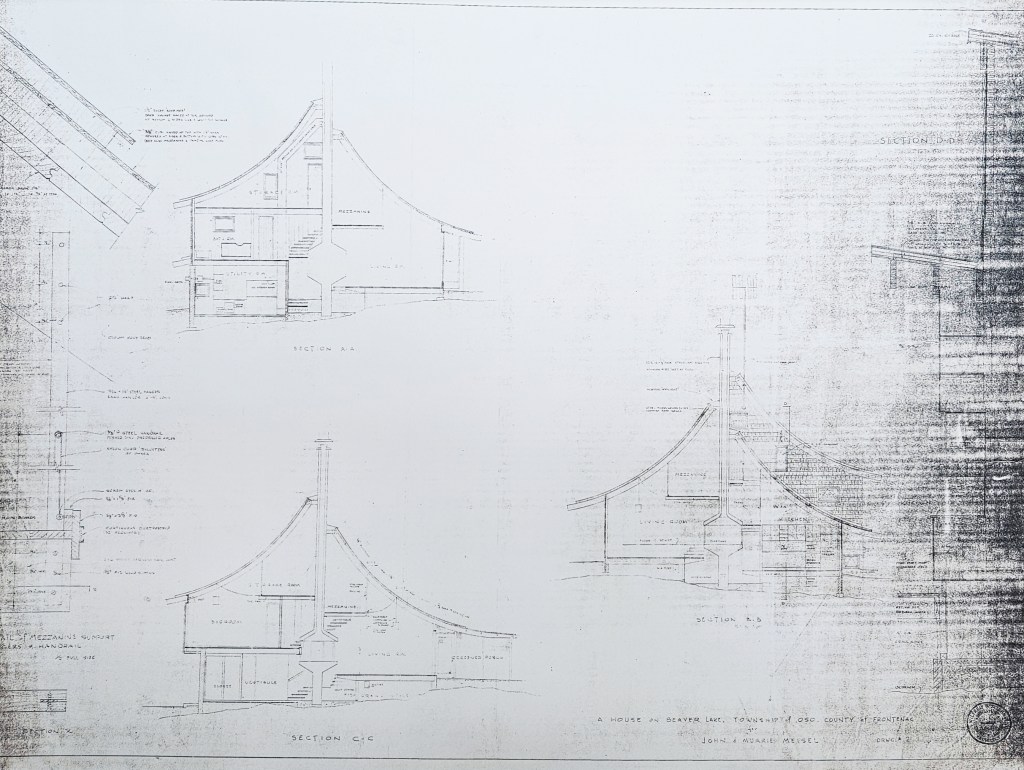
Wilfred Sorensen, Architect
Wilfred Sorensen visited the 135 acre property with John and Murie Meisel in the late ’60s. John asked if he could design a small cabin and Murie helped build the artistic vision of Colimaison.
Sorensen graduated with a Bachelor of Architecture from McGill University in 1953. He practiced in Kingston for 35 years. After inventing a non-electric circulating pump, he closed his architectural practice to develop the pump for use in solar water heating systems.
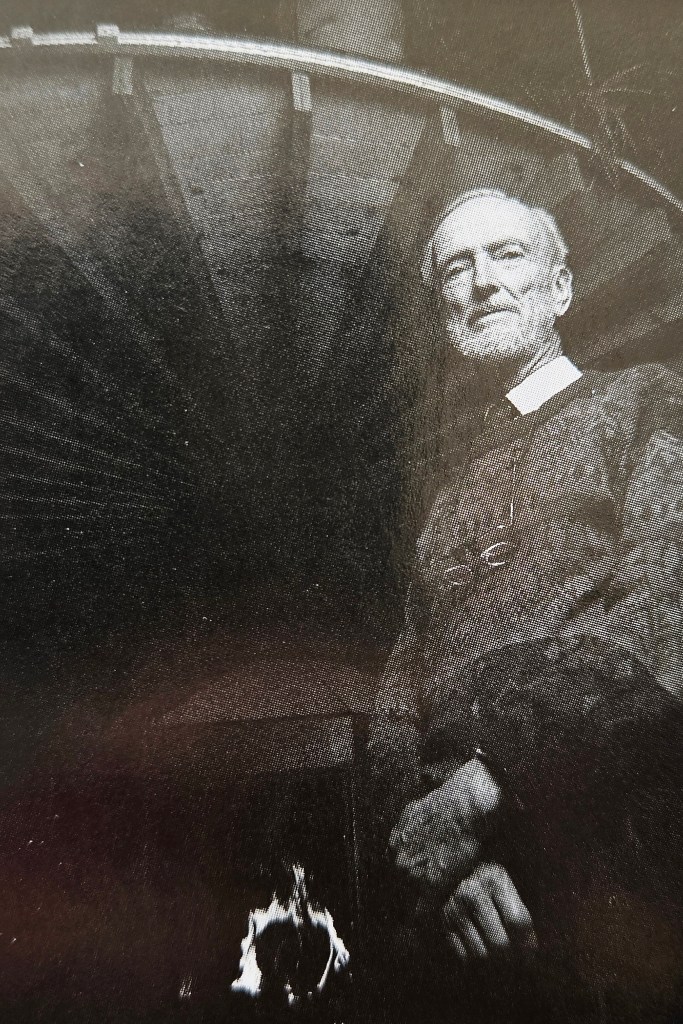
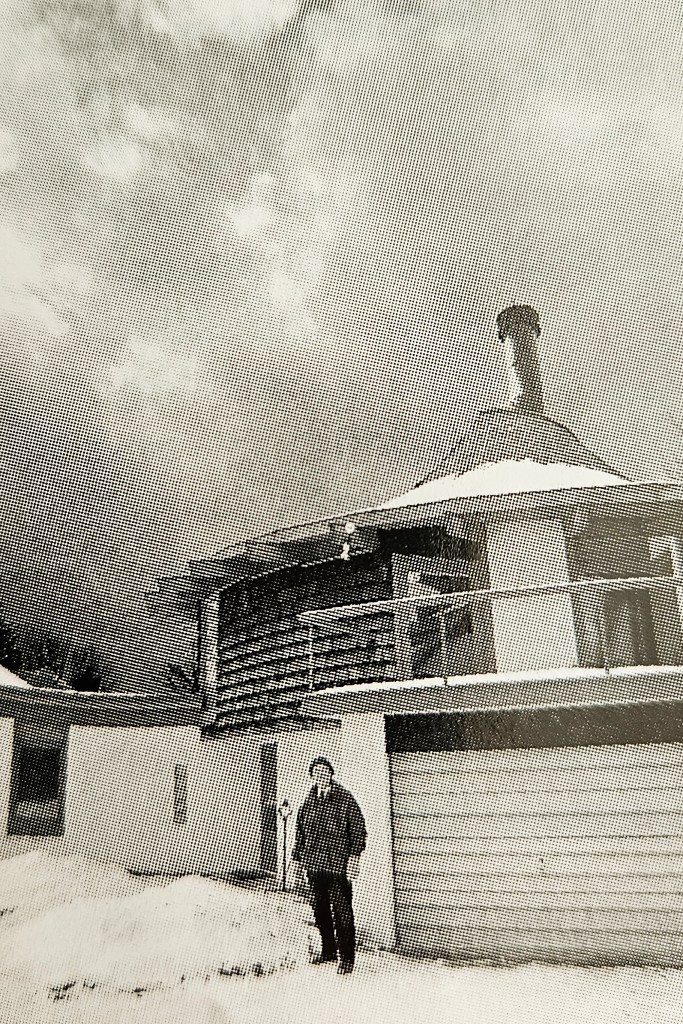
Barney Closs
Builder Barney Closs was dedicated to Meisel House. He was enthusiastic and dedicated to the project, even working through winter months. Closs died just before the building was complete. His contribution will be forever remembered with his signature on the floorboard and his incredible artistry on display throughout the house.

“The Meisels’ house is a delightful surprise, its ceiling swooping upward like a tent, its floor levels connected by a spiralling central staircase. Off to one wing is John Meisel’s library, eight large bookshelves mounted on rollers with books in English, French, German and Czechoslovak. In another wing is the artist’s studio where Murie works, mostly in batik.
“The house was built on the Meisels’ 150-acre property in 1971, and designed to harmonize with its natural setting. The windows overlook the surrounding lake, forests and hills. Every morning in the summer, Meisel swims two lengths of his lake, a distance of about a mile and a half. In winter, he skates and skis. [Note: John Meisel lived to 101!]
“For the seminar [with Queen’s University students on federalism and constitutional predicaments], he sat with his students around the [oct]agonal glassed-in fireplace that dominates the living room like a giant lantern. Suddenly, there was a booming sound and Meisel leapt up: “Chimney’s on fire; I’d better do something about it!” He grabbed an extinguisher that operated like a flare to burn up oxygen in the chimney.
“A few minutes later he was back in his seat with a burn hole in his sweater. “I guess I should have read the instructions first,” he said, obviously relishing the excitement. He’s a man who loves life, and incidents like this only add to its piquancy.”
-“The reluctant bureaucrat,” stories by David Pulver, The Whig Standard Magazine
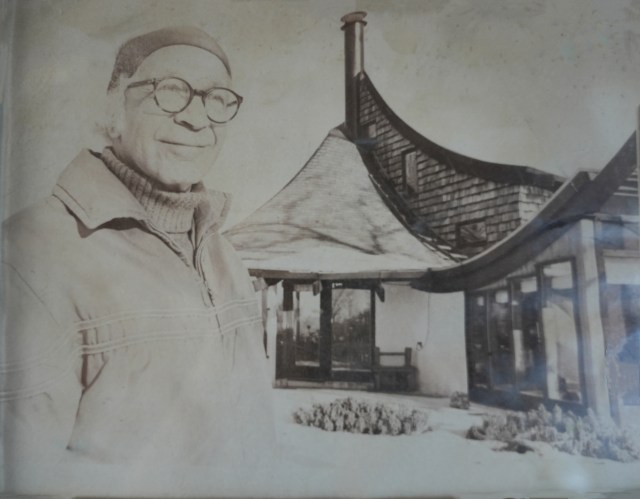


Muriel Meisel (1918-1986)
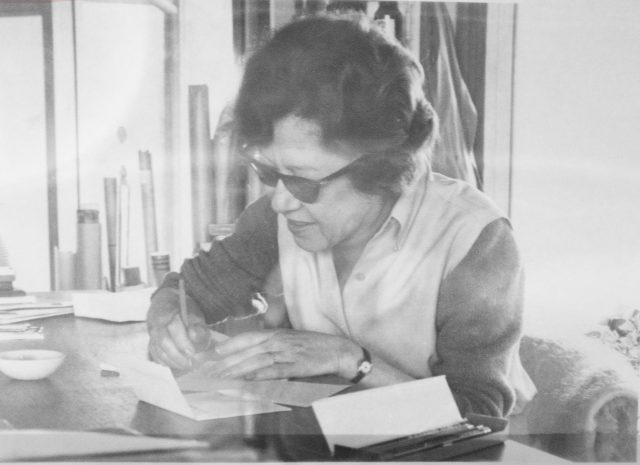
“Murie was born in Picton and grew up in Oshawa, where she started making cards in her teens. She met her husband, Queen’s political science professor John Meisel, at Victoria College of the University of Toronto; she drew cover designs and New Yorker-style cartoons for the college’s literary journal while he was its editor.
“The refined silkscreen and woodcut designs, made mostly in the ’60s and ’70s, were printed by the artist herself and cover a wide range of themes and styles — from abstract images of snow to traditional scenes of the three wise men. She built bookcases, sculpted magnificent gardens (one was photographed for The Whig-Standard), made stained glass and batik, which she learned how to do in 1976 when her husband was working at Yale.
“Besides making Christmas cards, designing theatre sets was her other major artistic pursuit. During the ’40s, Murie designed sets for several amateur productions directed by renowned actress and director Dora Mavor Moore at the University of Toronto. After the Meisels moved to Kingston in 1949, she designed sets for the International Players, a local professional repertory theatre troupe. She also assisted with university art classes taught by Andre Bieler, who later founded the art department at Queen’s. Murie made a great contribution to a famous community effort in the ’60s when she designed posters for a campaign to save the Grand Theatre — then a movie house — from demolition.”
Excerpts from “Personal Greetings” by Jennie Punter. The Whig Standard, Dec. 12, 1987.
In January 1987, 25 of Murie’s greeting cards were on display at the Agnes Etherington Art Centre at Queen’s University in Kingston, Ontario.
 Meisel House